The sentiments shared in every single one of these videos are paramount to understanding not…
To Be A Black Woman In America
30 June 2020

To be an American Black women can be exhausting, infuriating, and even hurtful at times because it has nothing to do with who I am as a Black women, but everything to do with my skin color.
In America, I am faced with racism, discrimination, and hate in some form pretty often. It comes in the form of microaggressions, implicit bias, police brutality, racism at work, racism on television, gentrification, colorism, and even conveniently being let go from a job because I didn’t fit in. I have been followed around in high-end stores and even ignored at a car dealership. I’m guessing it’s because they assumed that I couldn’t afford a luxury car. As a Black woman, it can be difficult.
I have been judged and labeled as angry, even told I have an attitude because I speak up for myself and don’t let anyone march me to the ground. A lot of Black women are assumed to be promiscuous due to the stereotypes shown in TV shows and movies. If you’re successful and educated, you’re considered uppity or even considered to be better than “the other” Black people. Wearing your natural hair is an issue. I once applied for a dishwasher job and was told that braids weren’t allowed. I told the employer I would take them out, but I still didn’t get the job. I have also had to deal with self-hating Black people who turned on me at my job and aligned with the oppressor against me.
Navigating this racist country can be daunting. I know that I have the same rights as every other person, it is my country too. But it’s also the country that enslaved my ancestors, and it is only God that knows what they endured, and the humiliation and pains they were subjected to. Especially the women who were raped at will, the children who were sent away, those who were used for scientific experiments and those beaten even for the smallest of transgressions. I carry the pain of my ancestors every single day. And I can only imagine what my grandmother, aunts and family members had to deal with post-slavery. My grandmother did daily work cleaning for wealthy White women, scrubbing their floors on her hands and knees, and being treated like a second class citizen. She later worked in a factory for almost 20 years, sewing buttonholes for Botany 500 suits only to lose the job because the factory abruptly closed due to bankruptcy. The daily quotas she had to fill were grueling. She was dropped from her job with nothing. No pension. No severance pay. The pain of being a Black Woman in America can be traced back to the early generation, and I to this day still feel the aftershocks.
I live in Harlem, NY. I have lived here since the ’80s at a time when crack cocaine invaded the community. It was later revealed that the government had a hand in it by funding a Nicaraguan war secretly. It devastated and destroyed our community. It reduced so many people to a shell of their former selves. At the time, we were faced with abandoned buildings, empty lots, lack of services, and sub-par supermarkets with vegetables that weren’t even fresh.
In 1990, we elected David Dinkins as mayor. He was Black and gave us hope.He promoted racial healing after the hell of the ’80s. He even increased affordable housing, which greatly benefitted many low-income earners. In 2001, Michael Bloomberg was elected, and the billionaire ushered in a tale of two cities. He rezoned 40% of the city and sparked waves of gentrification and displacement. Harlem was one such area. Stores that were never before in Harlem appeared. Better grocery stores, fresh vegetables, franchises, and condominiums. And slowly but surely, we realised that we were being gentrified. A few White people here and there and then so many that we started wondering what was going on. These are the same people who said they would never go up there past 96th street. The joke was that once the train passed 125th Street, it became “the soul train”.
As a Black woman, it’s devastating. The White people that hate us so much are now moving to a historically Black neighborhood and wishing we would leave. They demanded to be the president of the Block Association and they call the police on churches whose worship disturbs them. These policemen, of which some are also racist, walk by them breaking the law by openly drinking alcohol to harass young Black men and they have an air of superiority that I can’t quite describe. Not all, but a lot of them. And as a Black woman witnessing this happen to my family, friends and neighbors; it is so sad that tears form in my eyes as I write this. I was reminded today of the saying, “White is right and if you’re Black, stay back”.
White people are now making me feel invisible in my own neighborhood. The only place where a Black person could, or at least should be able to get a break from the oppressor. Sometimes, I even feel betrayed by some of the Black men in Harlem. I used to have a favorite Friday night hang out spot. But I don’t go there much since it’s gentrification because I’m invisible to most of the Black men there. They step all over me to get to a White woman. It’s the worst feeling ever. America is an expert at making me feel like a second class citizen, as if I have no value, and even invisible.
I would be remiss if I didn’t address what is happening around the world concerning police brutality. Systemic racism has destroyed the Black community by way of poor education, impoverished neighborhoods, low wage jobs, over-policing of Black neighborhoods, income inequality and of course, police brutality. As a Black woman myself, I feel a deep pain for Black women murdered by police. I was aware of the injustice against Black men, but when I saw the stories of women murdered by police, it was heartbreaking because it meant it could also happen to me, as well as the Black women in my life. You’d think a woman would not be subjected to that too, but I remember the police murder of 66-year-old Eleanor Bumpers even back in 1984. Police were there to enforce a city-ordered eviction, and they were told she was emotionally disturbed and a psychiatrist labeled her as psychotic. When they knocked on the door she didn’t open it, and when they forced open the door she was inside with a knife in hand to resist. She was naked and weighed 300 lbs. The police claimed she lunged at them and an officer shot her twice with a shotgun. The officer involved was acquitted, however, the city agreed to pay the family $200,000 in damages.Times have not changed. So many women have died from police brutality in America. From the 2000’s onwards, these women include Darnisha Harris, Malissa Williams, Kendra James and many more. Just recently, Breanna Taylor, an emergency medical technician, was shot eight times from a no-knock warrant. She was asleep in her bed with her boyfriend at the time of the attack. The even more painful aspect of this is that the suspect they were looking for was apprehended already.
This is just a little illustration of what being a Black woman in America is like. I can go on, but this article would turn into a book. I have hope that America may rectify some of the wrongs in light of recent events. I continue to gain strength and inspiration from my ancestors, family and my friends. I will always use my voice to fight like my grandmother, my mother, my aunts, so many other strong Black such as Sojourner Truth, Rosa Parks, Toni Morrison andAngela Davis. I am a proud Black American woman who will exercise her right to free speech and lead by example.
All in all, it may be a struggle, but I wouldn’t trade being a Black American woman for anything in the world. I love it and we ROCK!!! The words of Maya Angelou ring true, “We may encounter many defeats, but we must not be defeated”.
_
Guest article written by R. Ess, an aspiring writer, entrepreneur, and Harlem resident.
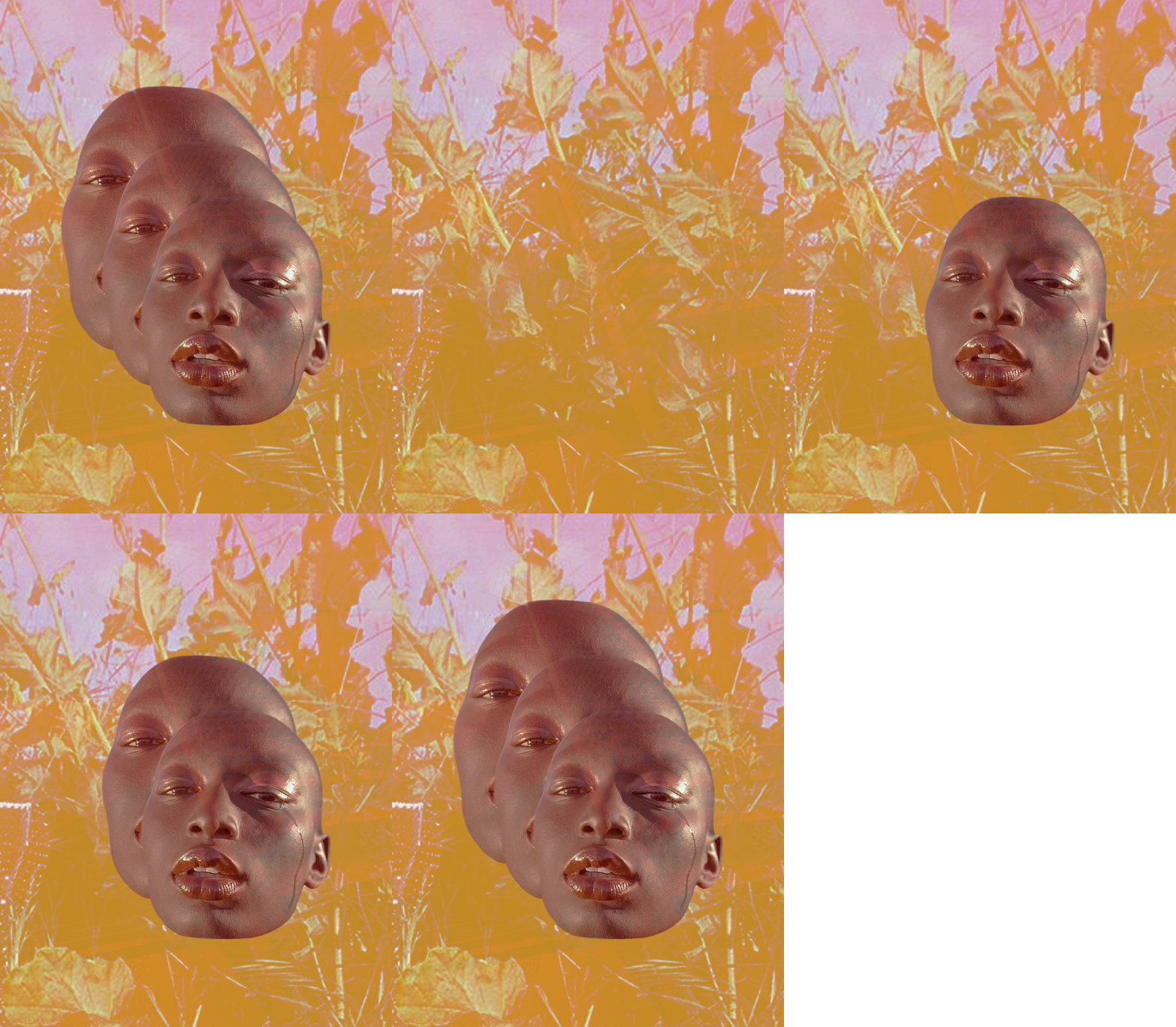
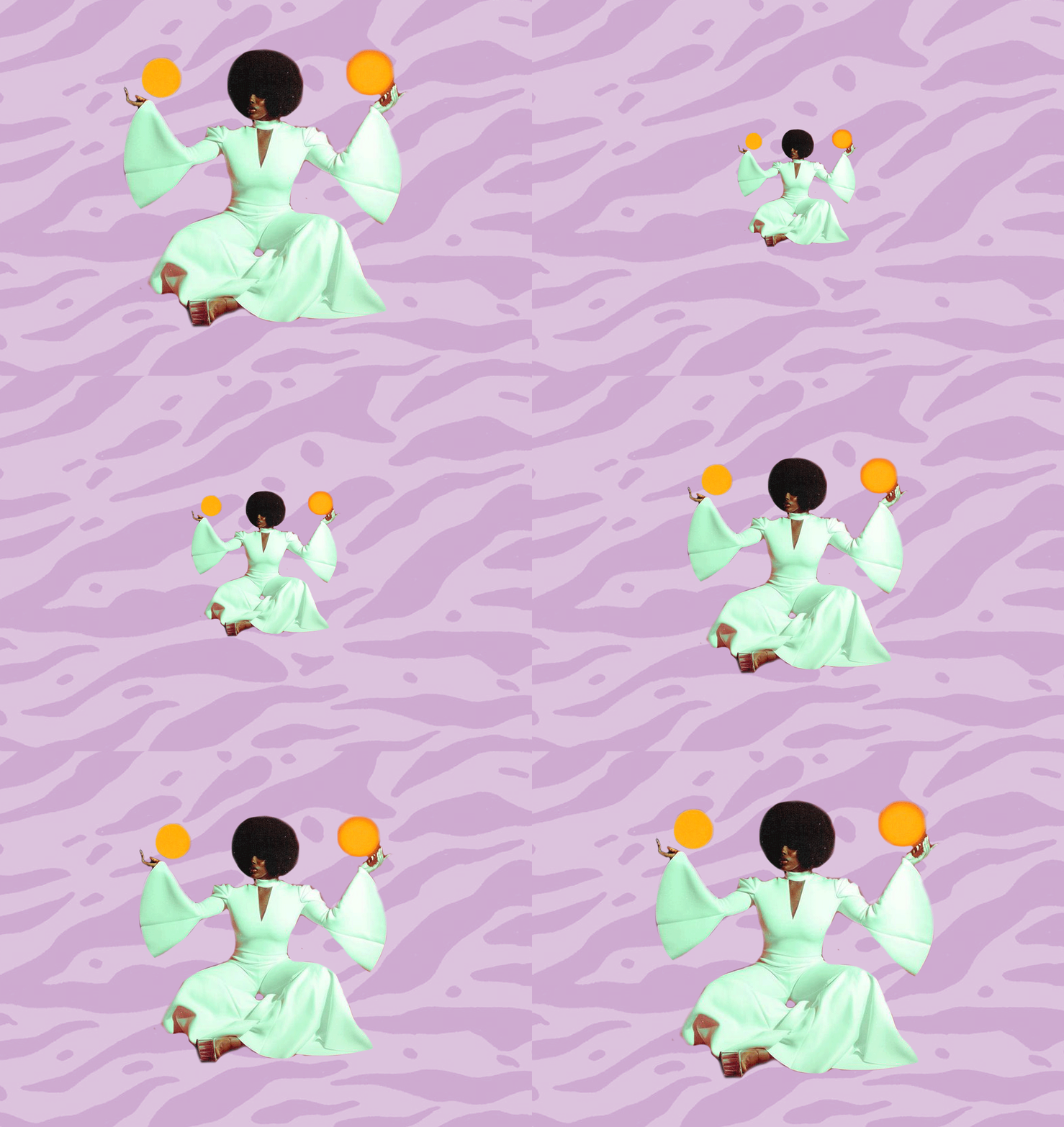
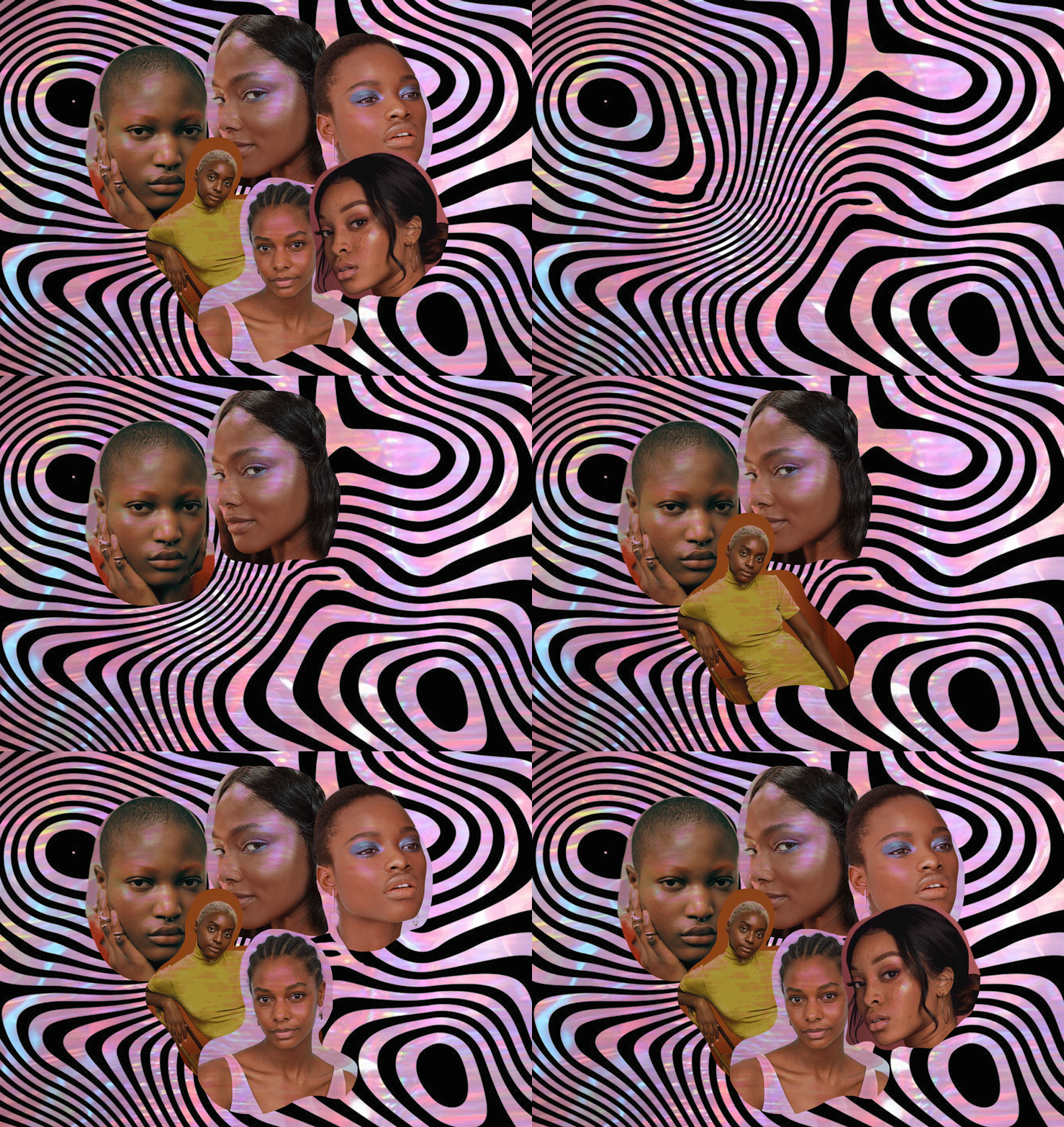
Original artwork created exclusively for YEOJA Mag by Nilufar Zarre.